
A cool thing happened with the invention of the internet: the average person suddenly had access to millions of entertainment choices (music, movies, books, etc) across genres and time periods.
Previously, this average person would be limited to what their local stores chose to stock or what the mail order catalogue could send through the mail. They had a very narrow, very limited selection of entertainment to choose from, typically focused on newer content that an advertiser or publishing house was certain could be sold.
Now, with the invention of the internet and file-sharing and streaming, suddenly, those limits are gone. With access to millions of entertainment options, how do you choose?
Enter the algorithm. The algorithm learns your taste and suggests things for you.
On the surface, this is good and it works sort of like this: I read 5 books on Amazon or Google Play. The algorithm recognizes that 4 of the 5 books are romance books. It suggests 10 more romance books and of those 10, I choose to read another 6.
Now I’ve read 10 romance books but the algorithm catches on that of the 10 I’ve read, I chose 7 hockey romance books. OK, we’re getting more specific now.
So the algorithm’s next 10 suggestions are all—you guessed it, hockey romance books.
On the surface this is a good thing. The algorithm is carefully curating my to-be-read list for me. It’s good for the business I buy from and it’s good for me as a reader because I get exactly what I want.
Until it’s not awesome.
Because I never get the chance to find different subgenres of romance. Maybe I’m in the mood for dark romance with vampires or really funny rom coms about fae kings.
The algorithm for all its advantages takes away an important piece of the reading and entertainment puzzle. It takes away the discovery. It takes away the process of digging through endless books until we find that one with the cover that speaks to us that will become the new favorite we read again and again until it’s a tattered-and-torn-and-so-very-loved comfort read we reach for in the darkest nights of our souls.
In short, algorithms steal our JOY. They take away the JOY of discovery and override our primal instinct to GATHER instead replacing it with endless scrolling and carefully curated lists that don’t give us the JACKPOT feeling we’re chasing.
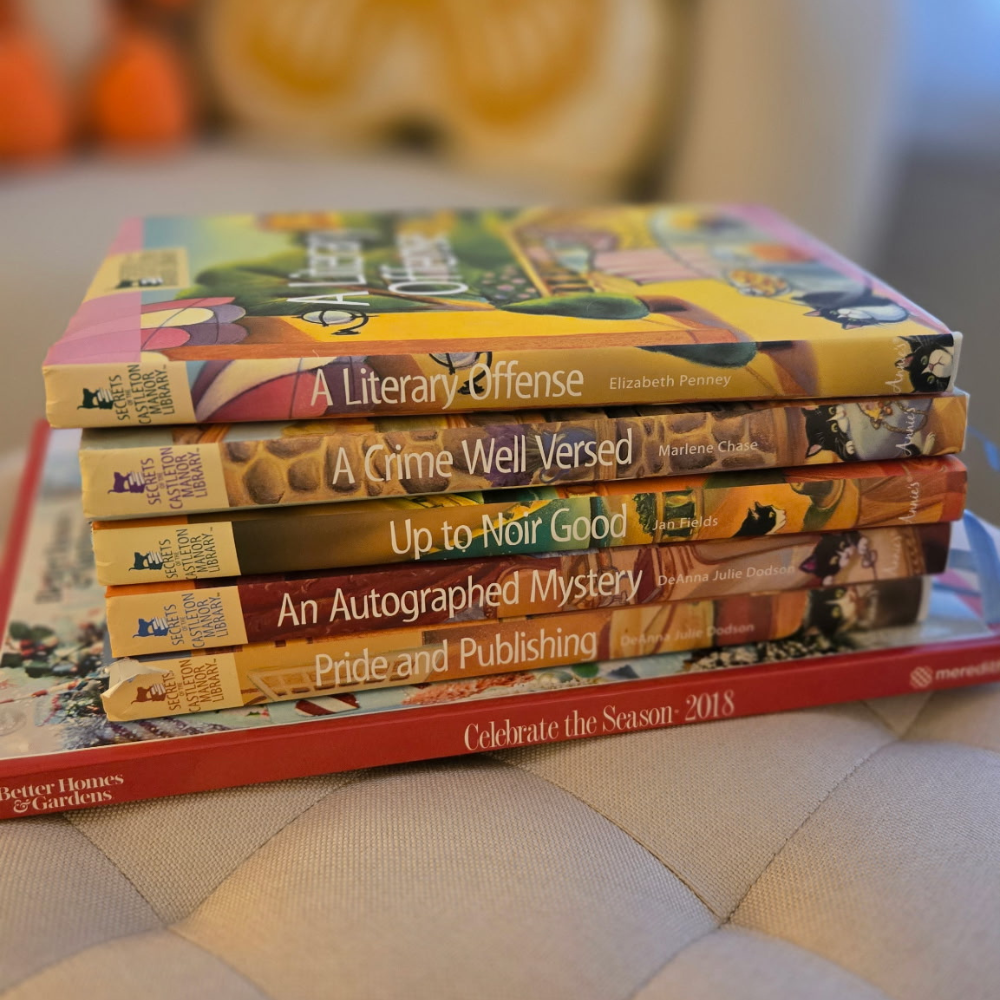
The picture above this post? Those six books were purchased second-hand from my library recently. I like the idea of giving these books another life. I like the idea of exploring in a genre I haven’t read a whole lot (cozy mystery!) and looking through the Christmas decorating book.
More than just liking second-hand books, there’s a jackpot feeling that comes with searching a box containing dozens of books that aren’t carefully curated but randomly thrown together. My library has books on harassment in the workplace next to a devotional for couples next to these cozy mysteries next to a big collection of books for kids. Whatever was donated recently got thrown into the pile and I got to happily dig through it until I came across the gems.
When you’re feeling like you don’t have inspiration and you don’t know what to write next, get away from your desk. Leave your smart device behind and do something that requires you to dig for your next treasure. Go visit one of these places:
- An antique shop
- A thrift store
- Your local library
- A garage sale
- Your local second-hand book shop
- An estate sale
- A relative’s dusty attic
- An entertainment store (check those clearance bins!)
You don’t actually have to spend money on anything. Just look. Take in the world around you. Appreciate life outside the algorithm. Your writing will be richer for it, and you’ll most likely find your next moment of inspiration.
